
The Fiery Flying Serpent
(originally published in Creation Research Society Quarterly, Vol. 42, No. 4, March, 2006, pp. 241-251.)
Abstract
Over the years Biblical scholars have speculated about the nature of the creature described in the Authorized Version as “the fiery flying serpent.” The nexus of modern archaeological discoveries, ancient historical accounts, and recent cryptozoological research provides new insights into the identification and characteristics of this creature. Moreover interviews and personal observations from the 2004 expedition that I led to Papua New Guinea convinced me that a fiery flying serpent still survives on a remote island there.
The Biblical Texts Reviewed
“The burden of the beasts of the south: into the land of trouble and anguish, from whence come the young and old lion, the viper and fiery flying serpent,” (Isaiah 30:6). In this verse the Bible mentions an intriguing creature, the fiery flying serpent. The Hebrew words are m’opheph [translated flying] and saraph [translated fiery snake]. It is here distinguished from the viper. Moreover, Isaiah 14:29 states: “Rejoice not thou, whole Palestina, because the rod of him that smote thee is broken: for out of the serpent’s root shall come forth a cockatrice, and his fruit shall be a fiery flying serpent.” Here the same animal is listed as distinct from all serpents in general. What exactly is this ancient flying creature referenced by the prophet Isaiah?
The scriptural word “flying” in the original Hebrew is of interest. About it, Goertzen writes:
That Hebrew word, m’opheph Jpvfm, is a polal participle; a form used only by Isaiah when describing the reptilian saraph (14:29 and 30:6). The polal indicates an intensive of the root pvf ooph that means to fly or flutter. BDB, [Brown-Driver-Briggs] then, interprets it as meaning to “fly about, to and fro.” The imperfect form of the polal is found in Gen. 1:20, “flying creatures that flutter to and fro…” The meaning may be best illustrated by a polal infinitive construct in Ez. 32:10 “when I cause my sword to fly to and fro” or “when I brandish my sword.” The rapid back and forth movement of the sword (brandishing) illustrates the emphasis of the polal intensive. The idea of TWOT [Theological Wordbook of the Old Testament] then, that m’opheph Jpvfm could indicate a serpent’s swift bite, will not work since a serpent’s strike is not a back and forth motion. The word indicates an animal with swift back and forth motion, like the flying of a humming bird (Goertzen, 1998).
Creationists over the years have suggested that this flying reptilian creature was a living pterosaur, still known in the region of Palestine at the time of Isaiah’s prophecy (see, for example, Ham, 1999, p.45). Bible commentators have differed in their interpretation of these passages. For example, E.J. Young writes of Isaiah 14:29: “From one snake will come a poisonous serpent, and that poisonous serpent will produce another that is burning and flying” (Young, 1983, p. 451). He holds that Isaiah 30:6 references a real winged serpent and cites Herodotus 11.75; iii.109; and Ammianus Marcellinus xxii.15 (Young, p. 341). Motyer seems to side with the minority NIV translation “darting venomous serpent” but mentions “fiery flying one” as an alternate translation (Motyer, 1993, p. 148). The NAS renders this creature “flying serpent.” The Septuagint translation of Isaiah 14:29 is ofei petamenoi, which are clearly words for a flying reptile with no variants. From a more liberal scholarship perspective, the authors of the Revised Standard Version translate it “fiery flying serpent.” The BDB lexicon authors also render the creature “a flying serpent or dragon” but go on to suggest that it had its origin in the Egyptian Serref and was “mythically conceived with serpent’s bodies (serpent deities)” (Brown, 2001, p. 977).
Oswalt’s (2001) monumental commentary offers the most thorough discussion of this passage that I found, attempting to identify what each of the serpentine creatures in Isaiah 14:29 represent. One possible identification is the Assyrian monarchs, a view rejected by Motyer because of dating discrepancies (Motyer, 1993, p. 148). But Oswalt then details how the “older commentators interpreted the staff as being a reference to the Jewish nation or the Davidic monarchy, both of which were in considerable disarray by the time of Ahaz’ death and both of which had caused the Philistines great grief. In this view Hezekiah is the adder and the Messiah is the flying serpent” (Oswalt, 2001, p. 977).
It should be noted that some commentators have held that the flying serpent is merely a snake that springs from the high branches of a tree and then glides through the air like a flying squirrel (Wiseman, 1972, pp. 108-110). These flying snakes are mentioned by the 18th century author Niebuhr as he traveled through Arabia (Niebuhr, 1792, p. 334) and are still known today through southeast Asia (Roach, 2002). Modern species are not particularly venomous, nor are they remarkably bright in coloration, so it is unclear why they would have been called “fiery” if this were the actual creature referenced. From a creationist perspective, it would seem that the pterosaur interpretation of these verses is at least as reasonable as the alternatives.
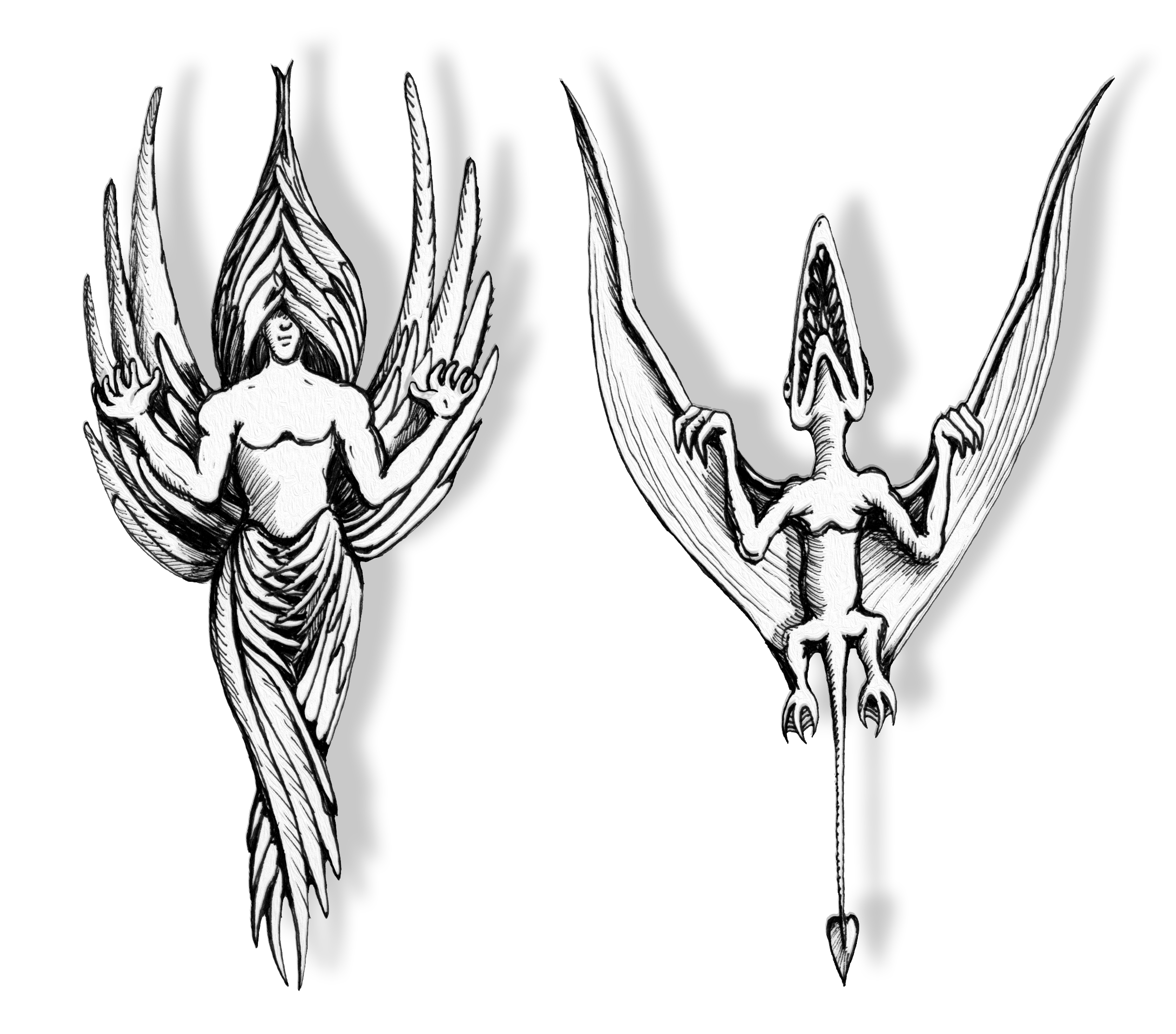
Figure 1 Saraph vs Pterosaur – Original Artwork by Richard Dobbs
The same Hebrew word saraph is employed by the prophet Isaiah to describe the heavenly beings that fly around God’s throne (Isaiah 6) and comes from a root that means “to burn” or “to kindle.” Could it be that these attendants appeared to be like the fiery flying serpents that Isaiah knew in his day? It would be akin to John’s recording of them in Revelation 4:6-8, where he likens these six-winged seraphim to specific animals. But unlike John, Isaiah did not see their faces in his vision; for they covered their heads with two wings and their legs with two wings, leaving only their hands (v. 6) and trunks uncovered. Perhaps they looked to him like svelte, glowing winged serpents [Figure 1]. While some commentators believe that the seraphim have nothing in common with the serpents except the name (Motyer, 1993, p. 76) most hold that there was some visual similarity.
Young writes:
The word “seraph” is also employed of poisonous serpents (Num. 21:4ff.) which could fly (cf. Isa. 14:29; 30:6)…. Those who favor the identification with serpents appeal to the statements of the classical writers; e.g. Herodotus (2.74) mentions holy serpents found at the temple of Jupiter at Thebes…. The seraphim are personal, spiritual beings, for they have faces, feet and hands, they employ human speech and understand moral concepts. The only relation which they sustain with the fiery serpents is that they have wings and are burning creatures (Young, 1993, pp. 239-240).
Oswalt again provides a very thorough analysis, affirming alternate interpretations:
Since they are called seraphim…a term elsewhere applied to serpents (Num. 21:16; Isa. 14:29, 30:6), some scholars believe that they were serpentine or dragonlike in appearance. However, the chief meaning of the term may be “fiery” (so Num. 21:6), so that the name of the snake is merely derivative (referring to their bite), and the use of the term for the ministering beings would indicate they were “fiery ones.” There is no reason to dismiss automatically either of these possibilities. Composite figures are known from all over the ancient Near East, and while none is so far attested in Israel, it is possible that use was made of them. Such mysterious, awesome beings would be quite appropriate in this sort of vision. On the other hand, fire is everywhere associated with God’s holiness…so that it would be entirely appropriate for those who declare that holiness (v .3) to be “fiery” in their appearance (Oswalt, 1986, pp. 178-179).
Other expositors have taken a much stronger position on the dragon-like identification of the seraphim (e.g., Joines, 1976).
The only other circumstance in which this Hebrew word saraph is used in scripture is the famous event involving snakes in Numbers 21 (and recounted in Deuteronomy 8:15). The children of Israel had been forced to travel south towards the gulf of Akaba (into what is modern Saudi Arabia) because the nation of Edom had refused them passage. Lacking water and increasingly contemptuous of the manna, these murmuring Israelites faced God’s judgment.
Vs 6 states: “And the Lord sent fiery serpents [hanechashim haseraphim] among the people, and they bit the people; and much people of Israel died.” The traditional interpretation of attacking venomous snakes invites some objections. First, how can snakes be “sent”? This same Hebrew word for “sent” (shalach) is employed when Moses “sent” the spies to go view the land of Canaan (Numbers 13:2) and when God “sent” an evil spirit in Judges 9:23. Snakes are generally not ranging or migratory creatures, nor do they normally travel in companies. They are not built to traverse significant distances at all. Yet the language implies they were dwelling elsewhere and were directed by God into the Israelite encampment (as opposed to being “created” like frogs from the Nile or the lice from the dust in the plagues of Exodus 8). Further note the request in vs 7 is for God to “take away the serpents from us.” This implies a removing of mobile creatures from Israel’s geographic vicinity.
The traditional interpretation of attacking venomous snakes (Edersheim, 1995, p. 133) faces another challenge. The biblical account indicates that many of the Jews died (probably many thousands). Obviously, God could miraculously do whatever He wishes, but one has a hard time envisioning the people being pursued across the wilderness by slithering poisonous snakes. Common snakes should have easily been avoided.
Thirdly we note verse 8: “And the Lord said unto Moses, Make thee a fiery serpent, and set it upon a pole: and it shall come to pass, that every one that is bitten, when he looketh upon it, shall live.” This passage is a beautiful picture of how those bitten by the Satanic curse of sin can not heal themselves from sure death; but they need only look in faith to Christ’s work on the cross to live. Indeed, Christ applied this passage to himself: “And as Moses lifted up the serpent in the wilderness, even so must the Son of man be lifted up: That whosoever believeth in him should not perish, but have eternal life” (John 3:14-15). Yet it seems strange to employ the cursed snake (a symbol of Satan from Genesis 3:1 to Revelation 20:2) as the parallel of Christ.
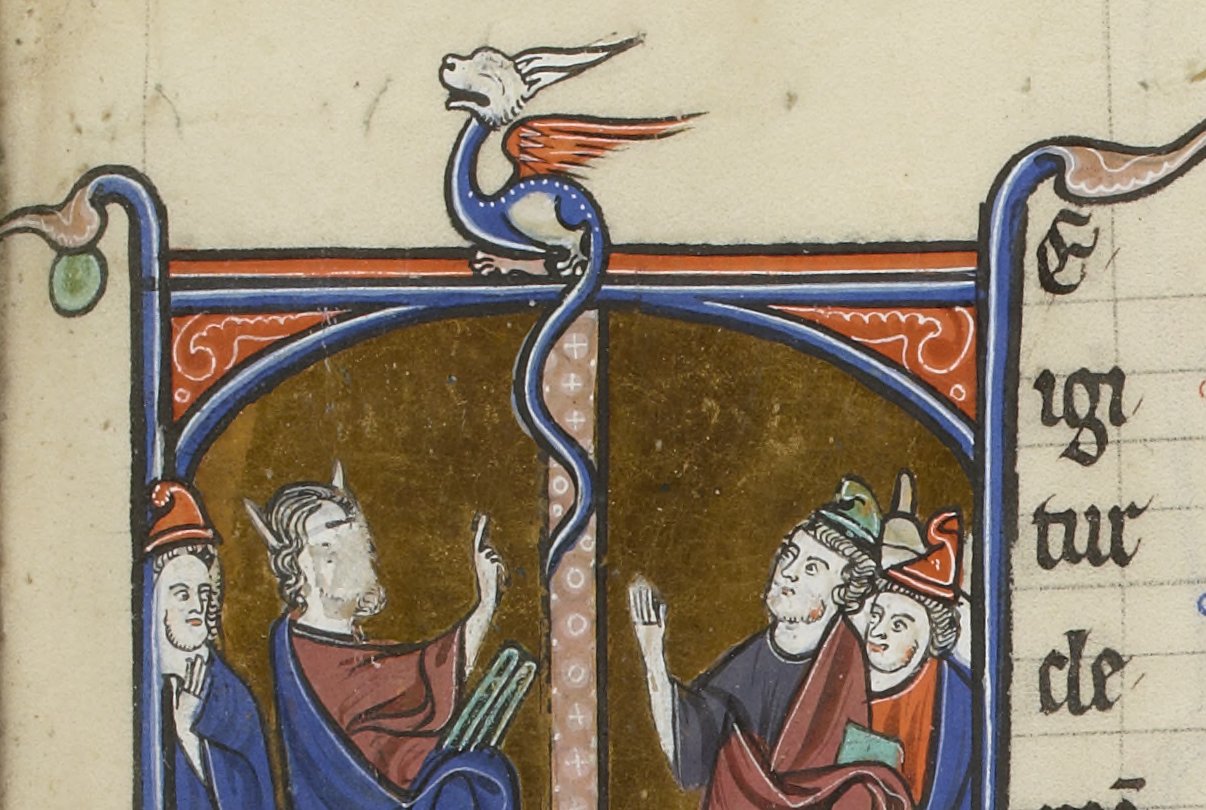
Figure 2 Nehushtan Manuscript Illustration from the 12th Century. Bibliothèque Nationale de France
It has been suggested by certain Bible scholars over the years that that the creature referenced here may be the flying serpents (c.f., comments on Numbers 21 in Gill, 1766.) Artists have depicted these serpents as flying in various old manuscript illustrations [Figures 2 and 3]. Matthew Henry, in his famous Commentary on the Whole Bible wrote:
They had impudently flown in the face of God himself, and the poison of asps was under their lips, and now these fiery serpents (which, it should seem, were flying serpents, Isaiah 14:29) flew in their faces and poisoned them (Henry, 1706, p. 520).

Figure 3 Moses & the Brazen Serpent – 1864 plate engraving by Jacques P. Migne.
So while the Hebrew word nachash is clearly the word for common snakes, these commentators have concluded that the compound word saraphim nachashim should be translated “fiery flying serpents.” It would appear that the saraph was a reptilian, snake-like creature, distinguished from common snakes predominantly by its ability to fly. Although I can not be certain that the saraph is not some species unknown to us in either fossilized or extant animals, I believe that the pterosaur identification is most reasonable. Indeed this interpretation seems to fit the context quite well. These flying snakes, or pterosaurs, could have attacked and overcome the Israelites from the air. They would have formed an ideal picture of the Messiah, in that Christ was made like us (indeed made sin for us according to II Corinthians 5:21), but he was still fundamentally different (divine). The winged serpent incorporates simultaneously the appearance of the snake and the lofty ability of flight in a unique animal. Moreover, the outstretched pterosaur on the pole would have formed a perfect cross!
There is an additional Bible passage that utilizes an almost identical Hebrew word. I Chronicles 4:22 mentions a Jewish ruler of the region of Moab who was named Saraph. One can only speculate why he would have been given this name, but the region he ruled to the southeast of Israel proper (on the border of Edom) was quite close to the area where the Israelites had encountered the serpents in the wilderness. It is likely that the New Testament also referenced these fiery winged seraphim when writing to the Hebrews: “Who maketh his angels spirits, and his ministers a flame of fire” (Hebrews 1:7). The emphasis then, it would appear, is on the saraph’s bright, fiery nature.
Historical & Archaeological Support
There is some historical and archaeological evidence in support of the pterosaur interpretation. Note that the nation of Philistia referenced in Isaiah 30 is geographically intermediate between the land of Israel and Egypt. This is the same region from which the ancient reports of pterosaurs come. Various historians told of small flying reptiles in Arabia and Egypt, recounted the virility of their poisons and described their predator, the ibis bird (Epstein, 1973, p.43).
The well-respected Greek researcher Herodotus wrote:
“There is a place in Arabia, situated very near the city of Buto, to which I went, on hearing of some winged serpents; and when I arrived there, I saw bones and spines of serpents, in such quantities as it would be impossible to describe: …It is reported, that at the beginning of spring, winged serpents fly from Arabia towards Egypt; but that ibises, a sort of bird, meet them at the pass, and do not allow the serpents to go by, but kill them: …The form of the serpent is like that of the water-snake; but he has wings without feathers, and as like as possible to the wings of a bat” (Herodotus, 1850, Book II, LXXV, pp. 75-56).
In his third volume Herodotus goes on to tell how these animals could sometimes be found in the Arabian spice groves. He describes their size, coloration, and reproduction. It seems flying serpents were infamous for hanging in frankincense trees. When workers wanted to gather the tree’s incense, they would employ putrid smoke to drive the flying reptiles away (Herodotus, 1850, pp. 107-108).
Josephus’ account is particularly lucid. He tells of Moses leading the Egyptian army against Nubia:
…but Moses prevented the enemies, and took and led his army before those enemies were apprised of his attacking them; for he did not march by the river, but by land, where he gave a wonderful demonstration of his sagacity; for when the ground was difficult to be passed over, because of the multitude of serpents, (which it produces in vast numbers, and indeed, is singular in some of those productions, which other countries do not breed, and yet such as are worse than others in power and mischief, and an unusual fierceness of sight, some of which ascend out of the ground unseen, and also fly in the air, and so come upon men at unawares, and do them a mischief,) Moses invented a wonderful stratagem to preserve the army safe, and without hurt; for he made baskets, like unto arks, of sedge, and filled them with ibes, and carried them along with them; which animal is the greatest enemy to serpents imaginable, for they fly from them when they come near them; and as they fly they are caught and devoured by them, as if it were done by the harts; (Josephus, Flavius, Book II, Chapter X, as translated by Whiston, 1960, p.58).
The relevant Greek words used by Josephus in this narrative are ἑρπετῶν or “erpetón,” which means “reptile” and ὄφεων or “ophis” which means “snakes”. The same general Greek word was employed by Herodotus (above) and Jesus Christ in John 3. And the exact form was used by Paul in I Corinthians 10:9 to describe the attacking serpents in the wilderness It is also the same as the Septuagint version of the wilderness account (ophis or ophesi in its masculine, dative, plural form). Since this is the common Greek word for snakes, perhaps there was no unique Greek word for pterosaur like the Hebrew “saraph.” Instead the Greek authors fell back on the phrase “flying serpent” as the way to distinguish the winged reptilian creature, just like the KJV translators did in English.
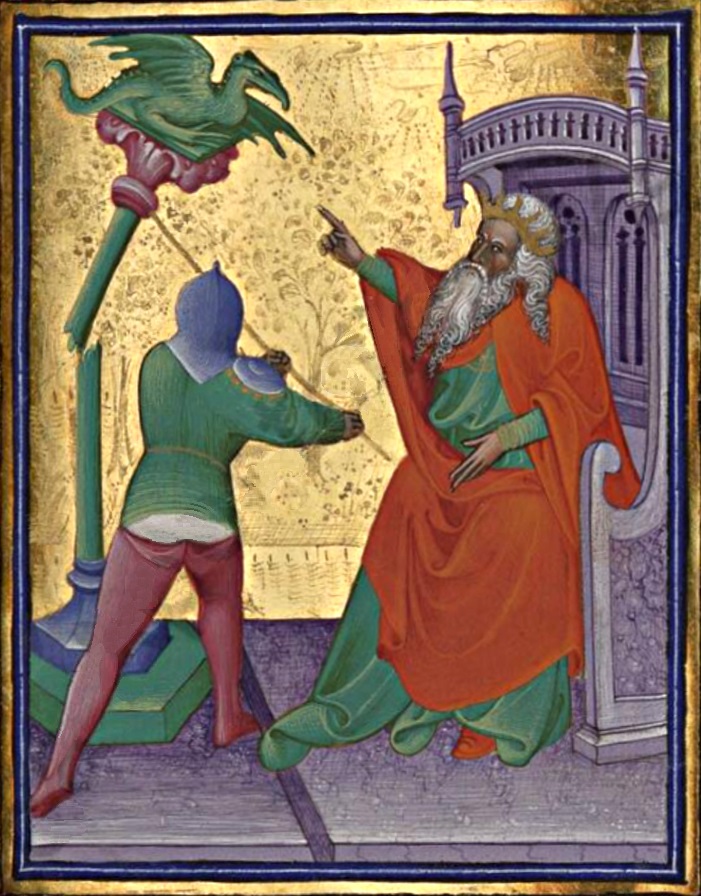
Figure 4 Hezekiah destroys Nehushtan. Bible Illustrations by Belbello da Pavia in 1434 (Vatican Library codex Barb.lat.613 Bible of Niccolò d’Este, p. 200.)
Pliny echoes the words of Josephus: “The Egyptians also invoke their ibis against the incursions of serpents; and the people of Elis, their god Myiagros, when the vast multitudes of flies are bringing pestilence among them…” (Pliny, as translated by Bostock and Riley, 1855, p. 933). The Assyrian monarch Esarhaddon recounts how he marched south into the desert “where serpents and scorpions cover the plain like ants” (Luckenbill, 1989, p.556) and he recorded seeing yellow serpents that could fly as he marched to fight against Tirhaka, king of Egypt and Nubia (Borger, 1956, p. 90). The ancient authors Aristotle, Philae, Aelianus, Ammianus, Mela, Solinus, anonymous 4’th century Coptic monks, the 13’th century Armenian historian Matthew of Edessa, Solinus, Cicero, Aristotle, and Philae all reference flying serpents (Goertzen, 1998).
After the incident in the wilderness of Arabia recorded in Numbers 21, the artifact of the saraph on the pole was preserved for centuries, through the times of the judges and the kings. Unfortunately, it later became an idolatrous symbol of worship, called Nehushtan. Hezekiah is recorded to have “removed the high places, and brake the images, and cut down the groves, and brake in pieces the brasen serpent that Moses had made: for unto those days the children of Israel did burn incense to it: and he called it Nehushtan” (II Kings 18:4). [Note Figure 4.]
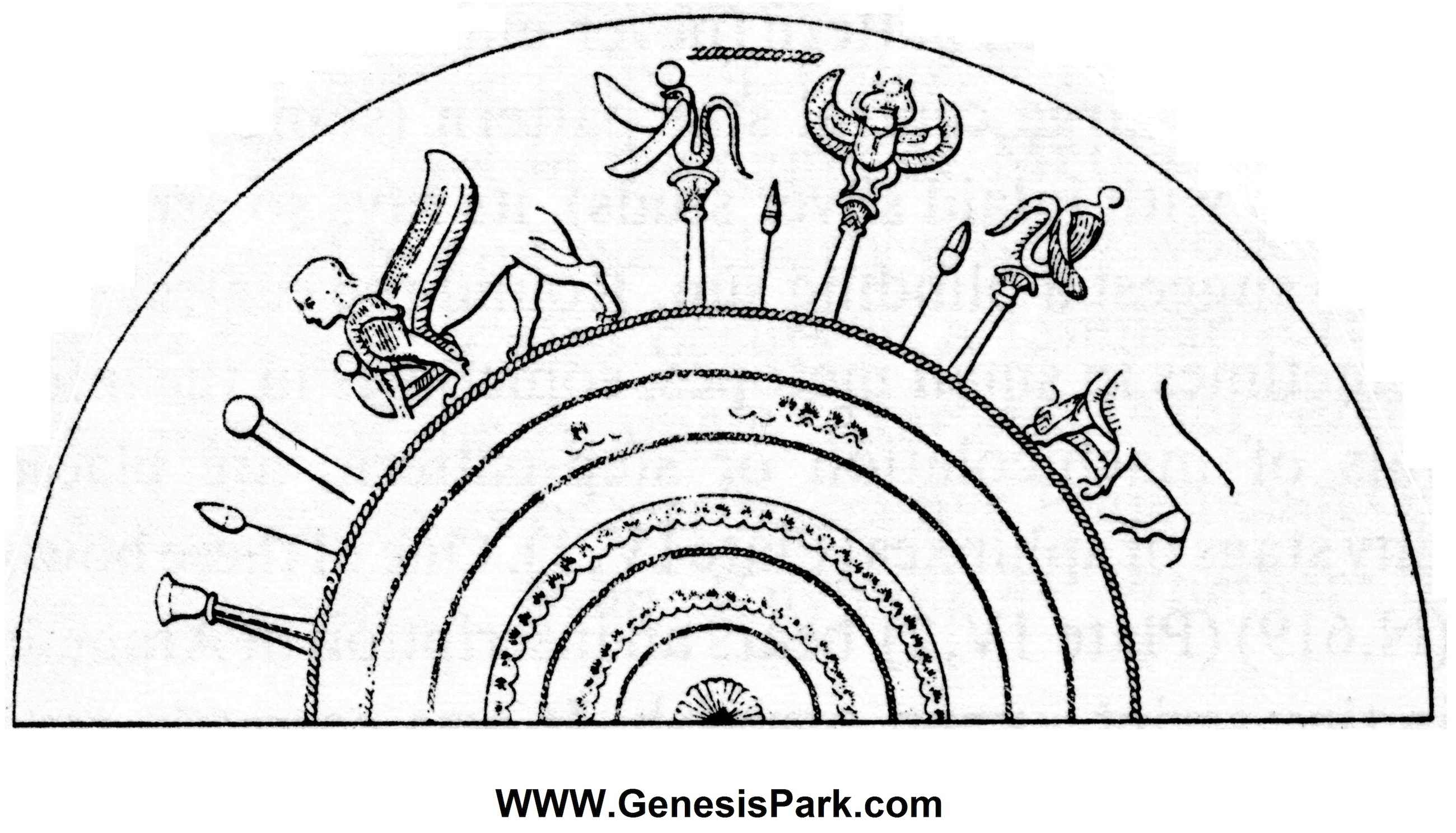
Figure 5 Nimrud Bronze Plate with Possible Nehushtan
Archaeological artifacts from this same time period provide evidence of pterosaur worship. A plate found with Sennacherib’s booty at Calah (Nimrud) depicts a winged serpent [Figure 5]. A lmlk seal, universally thought to date from Hezekiah’s reign and found in many excavations of the cities of Judah, was found in the same area at the Assyrian palace as well as other bronzes with Hebrew inscriptions. Therefore it appears likely that the plate is of Hebrew or Phoenician origin (Barnett, 1967). Particularly fascinating are the spikes along the flying serpent’s tail and the ribbed wings.
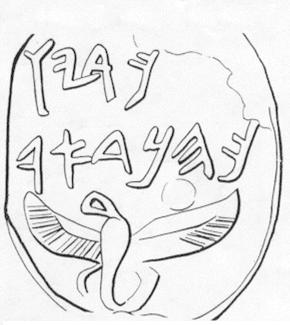
Figure 6 Keel, Othmar, Jahwe-Visionen und Siegelkunst, 1977.
Further indication of the religious significance of the pterosaur symbol comes from the multiple flying serpent seals recovered from Judah’s Lachish region [Figure 6]. Shown to the left is an artifact found near Samaria with a Hebrew inscription of the “priest of Dor” on it Note the ribbed wings and long tail. Perhaps such idolatrous flying serpent worship was part of the reason that God allowed the fenced cities (including Lachish) to fall to Assyria, while miraculously preserving King Hezekiah and Jerusalem (II Kings 18:13-14).
The Jewish Encyclopaedia states: “The seraphim are frequently mentioned in the Book of Enoch (xx. 7, lxi. 10, lxxi. 7), where they are designated as δράκονες (‘serpents’), and are always mentioned, in conjunction with the cherubim, as the heavenly creatures standing nearest to God. …Some authorities hold that the seraphim had their origin in the Egyptian ‘seref,’ a composite, winged creature…” (Hirsch and Benzinger, 2002, p. 201). Since the Israelites had lived with Egyptians for so many years, it is not surprising that they would have adopted their word. Indeed, many compelling depictions of the pterosaur, including seal artifacts and King Tut’s throne, were found in Egypt. (See, for example, the Genesis Park pterosaur picture archive).
Even two hieroglyphic hymns (used for the coronation of the Pharaoh) found within the pyramids mention the “seref:”
The doors of the horizon are opened, their bolts are slipped.
He comes to thee, O Red Crown; he comes to thee, O Fiery One [seref].
He comes to you, O Great One; he comes to you, O Magician.O Red Crown, O Inu, O Great One,
O Magician, O Fiery Snake! [seref]
Let there be terror of me like the terror of thee.
Let there be fear of me like the fear of thee (Frankfort, 1948, pp. 107-108).
The first century author Silius Italica (1934, p. 335) wrote that “a serpent, glittering with rough spots of gold, was seen to glide athwart the sky between the clouds, tracing a furrow of fire in the heavens [considered a portent].” The Roman poet Lucanus (1896, pp. 558-559), who accurately described many reptiles, wrote of “the chelydrus, whose track smokes as it glides along.”
Historical references to pterosaurs have been made in more recent times as well. Four of the leading naturalists of Medieval Europe (Ulysses Aldrovandi of Italy; Conrad Gesner of Switzerland; Edward Topsell of England; and Pierre Belon of France) reference flying serpents. An example from the Middle Ages is the compelling account of bright flying serpents described by Marie Trevelyan (1909):
The woods around Penllyne Castle, Glamorgan, had the reputation of being frequented by winged serpents, and these were the terror of old and young alike. An aged inhabitant of Penllyne, who died a few years ago, said that in his boyhood the winged serpents were described as very beautiful. They were coiled when in repose, and “looked as though they were covered with jewels of all sorts. Some of them had crests sparkling with all the colours of the rainbow.” When disturbed, they glided swiftly, “sparkling all over,” to their hiding places. When angry, they “flew over people’s heads, with outspread wings bright and sometimes with eyes, too, like the feathers in a peacock’s tail.” He said it was “no old story,” invented to “frighten children,” but a real fact. His father and uncles had killed some of them, for they were “as bad as foxes for poultry.” This old man attributed the extinction of winged serpents to the fact that they were “terrors in the farmyards and coverts.” An old woman, whose parents in her early childhood took her to visit Penmark Place, Glamorgan, said she often heard the people talking about the ravages of the winged serpents in that neighbourhood.
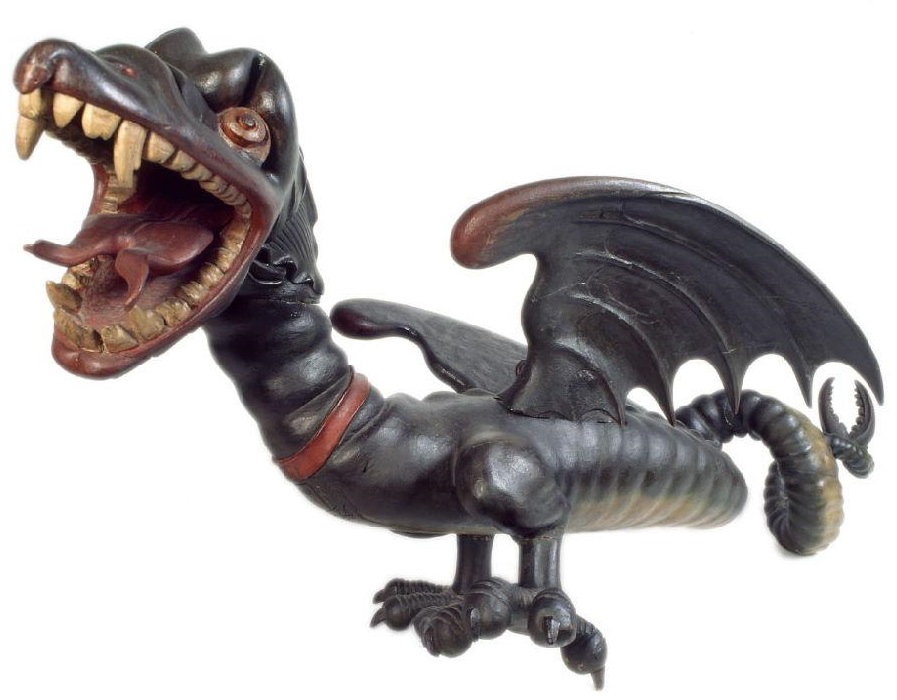
Figure 7 French Wooden Dragon
European reports of flying serpents living in Egypt persist through the 1600’s. The Italian naturalist Prosper Alpin (1979, pp. 407-409) wrote a fascinating natural history of Egypt in the 1580’s. He describes their tail being “thick as a finger,” their length being “as long as a palm branch,” and their leaf-shaped tail. All is precisely like modern fossil reconstructions. Among several such depictions from that era, a French woodcut image [Figure 7], dating from the 17th century, displays remarkable features of a pterosaur, including tail vane, crest and hints of claws on the wings.
The prolific 17th century writer Athanasius Kircher’s record tells how the noble man, Christopher Schorerum, prefect of the entire territory, “wrote a true history summarizing there all, for by that way, he was able to confirm the truth of the things experienced, and indeed the things truly seen by the eye, written in his own words:
On a warm night in 1619, while contemplating the serenity of the heavens, I saw a shining dragon of great size in front of Mt. Pilatus, coming from the opposite side of the lake [or ‘hollow’], a cave that is named Flue [Hogarth-near Lucerne] moving rapidly in an agitated way, seen flying across; It was of a large size, with a long tail, a long neck, a reptile’s head, and ferocious gaping jaws. As it flew it was like iron struck in a forge when pressed together that scatters sparks. At first I thought it was a meteor from what I saw. But after I diligently observed it alone, I understood it was indeed a dragon from the motion of the limbs of the entire body. From the writings of a respected clergyman, in fact a dragon truely exists in nature it is amply established” (Kircher, 1979, pp. 179-180).

Figure 8 Sketch of the Skeleton of the Dragon from Rome
Other Medieval authors discussed flying creatures that “glowed at night” from Norway and the French Alps (Constable, 1984, p. 81). Pliny the Elder makes mention of unusual birds that lived in the Hercynian Forest of Germania which have feathers that “shine like fires at night.” Medieval bestiaries named these birds the Ercinee. Various ancient authors and mapmakers describe luminescent nocturnal flying creatures. The classic work Beowulf even mentions flying dragons that emit fire (lines 2307-2336) and reptiles blasting fire at night (lines 2773-2783). Bill Cooper wrote:
The last monster to be destroyed by Beowulf (and from which encounter Beowulf also died in the year AD 583) was a flying reptile which lived on a promontory overlooking the sea at Hronesness on the southern coast of Sweden. …Interestingly, the Saxons also described this creature as a ligdraca, or fire-dragon… (Cooper, 1995).
A dragon was supposed to have lived near Rome in December, 1691. According to the story, the animal inhabited a cave and terrorized the local population. After its demise, a sketch of the skeleton [Figure 7] survived in the possession of an Ingegniero Cornelio Meyer. It seems to be a credible pterosaur specimen. There is a clear indication of a head crest. Five digits are visible for each foot. The upper arm bone can be seen at the front of the wing as well as the hint of the prototagium (in front of the lighter colored upper arm of the near wing). The membrane wings are shown in front of the legs, on the vertebrae, matching the fossils. The femur is properly shown as a single bone. The tibia and fibula, the twin lower leg bones, are visible too. Some have suggested that it could be a fossil or faked composite, but it is much too accurate to be considered a fabrication. The survival of the skin suggests that it is not a fossil since it includes accurate wing features, a head crest, and reptilian ears.
Samuel Bochart (17th century writer) produced one of the most outstanding studies of biblical reptiles ever accomplished and maintained the existence of flying reptiles. Bochart describes an ancient Hebrew work Porta Coeli mentioning how “the flying saraph sets fire to the air, corrupting [or poisoning] all that is near it” (Bochart, 1793-1796, p. 215). Many other accounts from the Middle Ages testify to the existence of glowing, flying reptilian creatures.
In his 1828 American Dictionary of the English Language Noah Webster sought out the derivation of the word dragon among the ancient Medieval roots. He concluded, “Hence I infer that the word originally signified a shooting meteor in the atmosphere, a fiery meteor, and hence a fiery or flying serpent, from a root which signified to shoot or draw out.” His first definition of the word dragon was “A kind of winged serpent, much celebrated in the romance of the middle ages” (Webster, 1828, p. 67).
From the Indians in the new world, pioneers and traders heard reports of flying serpents. The Crow Indians had a number of stories of the Thunder Bird, which they clearly differentiated from the Eagle. In about 1880 Chief Medicine Crow made a drawing of multiple reptilian creatures, including a snake with wings. In about 1870 a young warrior named Goes Ahead encountered a strange creature that he thought was a bird, flying awkwardly. It fell to the ground and he saw that “although it had wings, it was not a bird, but more like a serpent—lizardlike.” The creature had a long heavy body, “serpentine with wings something like a dragonfly and a tail” (Mayor, 2005, pp. 275, 277). These Native American reports, largely from the western United States and Mexico have continued, even down to the present time (Henri, 1948, pp. 107-108).
Modern Day Research
We have noted how the pterosaur interpretation fits well with the scriptural account and is supported by historical and archaeological evidence. There still remains the question of why the “fluttering” pterosaur would be called a saraph when the root of this word is “burning.” Some scholars have speculated that this refers to their venomous bite. Others suggest that, like the brilliant seraphim around the throne, it references their luminosity. Maybe the serpent on a pole was made out of bronze so that it would appear bright like the attacking pterosaurs. At this point cryptozoological research can perhaps add some insight into characteristics of pterosaurs.
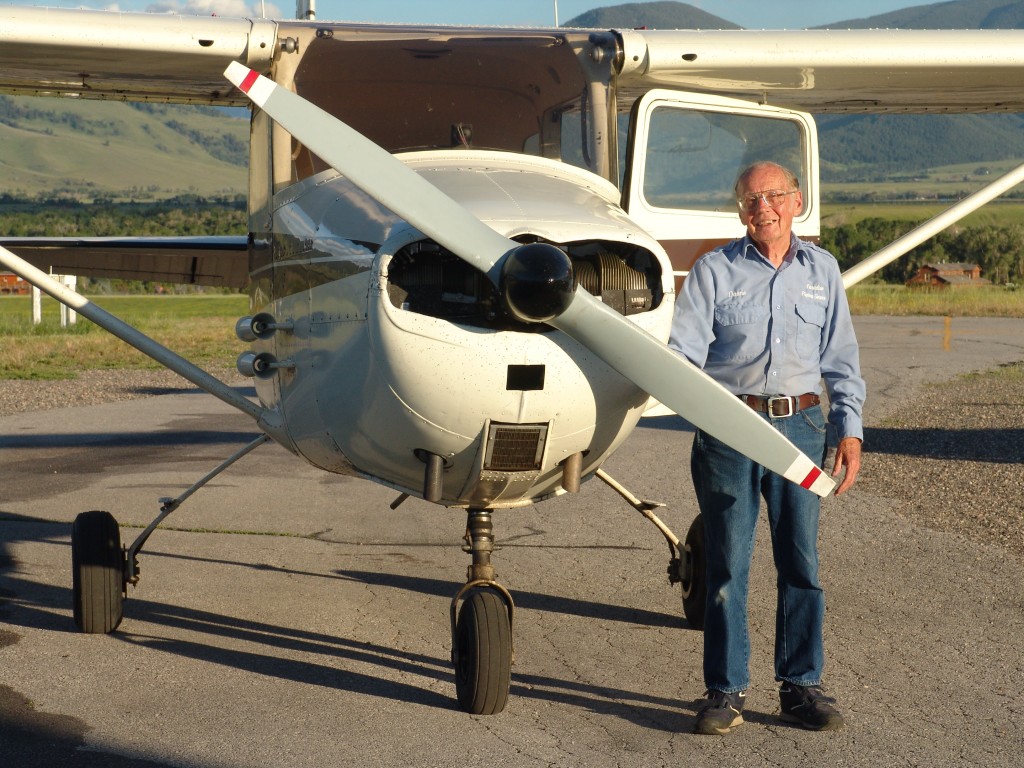
Figure 9 Duane Hodgkinson and Airplane
Reports of extant pterosaurs come from around the world, including the Kongo-mato of Zambia and Kenya and the thunderbird of the western United States. But in my estimation the most promising region for finding a live pterosaur is Papua New Guinea (PNG). During World War II (1944 timeframe), Duane Hodgkinson [Figure 9] was stationed east of Lae, near Finschaven, PNG as part of an Army weather observation unit. About noon one day in August he was walking up a trail and came to a grassy clearing in the forest when he was startled by a crashing in the brush. As he watched a large bird-like creature ponderously rose from the ground, circled and flew away. Hodgkinson, a pilot, estimated the wing-span to be about 20 ft. He clearly recalls the dark-gray coloration, long serpentine neck, beak, and distinctive head crest. It reminded him of the cartoon Alley Oop. Hodgkinson remarked to his associate that it resembled a pterosaur. His associate, an evolutionist, declared that this was not possible since all pterosaurs were extinct! (Hodgkinson, 2004).
In 1987, Tyson Hughes, an English missionary, began an 18 month contract to assist the Moluccan tribespeople of Ceram Island, Indonesia to develop efficient farms. Tyson heard stories about a terrifying creature called the Orang-bati (“men with wings”) that possesses enormous leathery wings like a bat and live in the caves of Mount Kairatu, an extinct volcano situated in the center of the island. In Indonesia there are foxbats that grow up to 6 ft. in wingspan. These bats are welcomed by the people because they knock ripe fruit out of the trees. The Orang-bati is quite clearly a different animal (Gibbons, 1999).
As Western missionaries began to penetrate the deep jungles and remote islands of PNG, stories of a flying creature called the Ropen (“demon flyer”) began to be reported. Described as a nocturnal creature, the Ropen possesses two leathery wings like a bat with “hands” on each wing, a long tail with a diamond-shaped flange on the end, and a prominent beak. The creature is thought to still inhabit the islands of New Britain and Umboi, located in the Bismarck Archipelago. The Ropen is said to have a taste for decaying flesh. Reports of harassment at native funeral gatherings at the government station of LabLab (on Umboi), and other attempts to disinter corpses suggests that the Ropen is a carrion animal. PNG natives will even put tin roofs over fresh graves to deter the creature.
Veteran missionary pilot Jim Blume tells of numerous credible encounters that New Guinea natives (about 70 eyewitness and 150 secondhand reports) conveyed to him over the last thirty years. These reports regarding the Ropen cover a wide geographic range: 150 miles southeast of his Wau mission station down the coastline to Popondetta and as much as 250 miles north up the coast to Wewak (Blume, 2000). However, long-time missionaries in Kavieng, at the northern tip of PNG, and those working in the Eastern Highlands province are not aware of this animal (Crossman, 2003). But there continue to be reports emanating from the island of Umboi. Wycliffe translators explained to me that the island population is linguistically divided between Kovia speakers (Papuan) which call the creature “Ropen,” and the Austronesian speakers (Mbula and Mutu dialects) who refer to it as “Ndwaaza.” The northernmost Mbula dialect uses still a different term, “Kundua.” Both “Ndwaaz(a)” and “Kundua” mean “shooting star.” In the western highlands there are stories from long ago about this creature, which they call the “Duos,” which appears to be an abbreviation of “Ndwaaz(a).” (For example, see Sucik, 2004 and Whitcomb, 2009.)
Although some superstition surrounds this remarkable creature, there are consistencies in the accounts from around the island regions (peoples that do not have any communication links) that lend credibility to the claims. The most remarkable part of the description is that the creature is reported to have a biolumiscent capability, like a firefly. Carl Baugh of the Creation Evidence Museum conducted two Ropen expeditions to PNG with Jim Blume, one to the island of Umboi and another further north to the Manus region. On their 1993 trip, it became clear to Blume and Baugh that the pterosaur-like creatures reported in that region were a different species from those observed further south. It was smaller (about 3 feet wingspan), tan in color (by native reports), and reddish in its glow. Coloration in the reports from Umboi, on the other hand, vary from glittering black to a very dark grey. The bioluminscence color is described as a white/bluish glow. Indeed, many who see the glowing creature fly past them describe it as a shimmering white light with a rainbow of colors being thrown off.
It seems that the Ropen possesses the ability to turn its internal light on and off at will. Also, reports suggest the presence of a secretion that drips behind when the underbelly glows. Reports suggest that this secretion is alkaline and burns the skin of those who come in contact with the creature. This brings to mind the ancient historian Aelian’s words about the flying snakes: “Megasthenes states that in India there are … snakes (ophies) with wings, and that their visitations occur not during the daytime but by night, and that they emit urine which at once produces a festering wound on any body on which it may happen to drop” (Aelianus, 1972, pp. 203-204). Strabo (1967, pp. 97-98) concurs: “…in some places there are serpents of two cubits in length, with membraneous wings like bats. They fly at night, and let fall drops of urine or sweat, which occasions the skin of persons who are not on their guard to putrefy.”
On one expedition to PNG, Blume and Baugh followed up on reports from a particular island in the Manus group that claimed these creatures were living in the caves dotting the island. While in a boat in the early evening they observed what appeared to be an oval-shaped luminscent flying object gliding from the hillside down along the bay. After observing the pulsing light-greenish light and also looking through a monocular night scope for about 20 minutes they lost contact with the object. The next morning, Baugh snapped a picture of a strange clawed print on the muddy beach (Baugh, 1999).
Could it be that a living pterosuar still exists today in PNG? Is this strange luminescence the reason that the scriptures refer to the flying serpent as “fiery”? Did the Jewish encampment perhaps come under assault by a flock of pterosaurs during the night? I determined to further research these Ropen reports, particularly focusing on the largely unexplored northern side of Umboi island with hopes of answering some of these questions.
Trip to Papua New Guinea
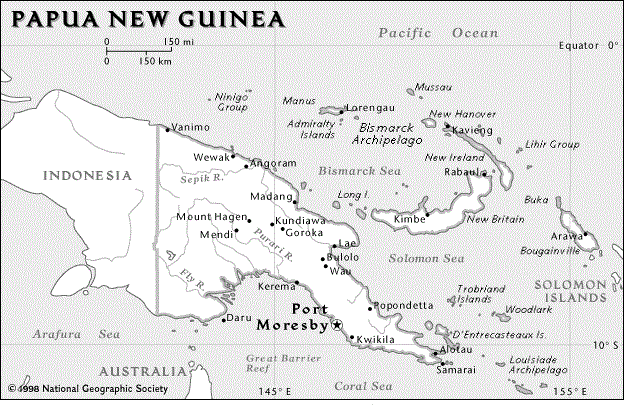
Figure 10 Map of Umboi Island in PNG – Picture credit National Geographic
On October 17, 2004 Garth Guessman of Los Angeles and I departed from the United States for a 23 day expedition to research the Ropen of PNG. Upon landing on a small grass airstrip the southeast side of Umboi island [Figure 10], we hired a guide and engaged a small banana boat to take our team up the eastern coast. We stopped to refuel in the town of Kampalap and conducted some interviews of villagers. They were familiar with the Ropen and claimed that it lived in a cave on Mt. Bel, though none could assure us that they had seen this haunt with their own eyes. They did, however, tell how the creature fishes in the reef off the coast. Approximately once a month it flies down to a large tree (at which point the glow slowly subsides) and, after making sure the coast is clear, swoops down to fish in the surf.
Further up the coast, at Aupwel village, natives knew less of the Ropen, only occasionally seeing it flying amongst the mountains. One notable exception was the secondhand report we received about a fisherman named William Gima. He claimed to have seen the Ropen “fishing.” The creature would give off a five second flash over the ocean to attract fish and then drop to grasp them. He claimed to have seen the five second flash within the prior few weeks. We shouldered our packs and hiked for the next few hours up into the mountainous village of Arot. This friendly community became the “home base” for us over the next couple weeks.
Our translator, Pastor Jacob Kepas, was becoming intrigued by the research we were undertaking and told us that he knew of the same type of creature in his home village as a child. His family lived near the mainland city of Wau is the Salamaua district of PNG. In his native Mali language the creature is known as “Seklobali,” which means “[creature that] carries its bed.” Although he could not give us any inkling how the animal had acquired this odd name, this was to become of interest to us later in our expedition.
From Arot village we clawed our way up Mt.Soul, a volcanic peak in the center of the island for a few nights of observation. Next we visited the nearby village of Mararamu. A villager there had seen the Ropen up close while fishing on a beach. He described his encounter to us in detail, pacing off a wingspan of approximately 13 ft (4 m) and describing its bat-like wings. Interestingly, he described how its tail was always held stiff and immobile, except at that point it attaches to the body. This is an important comment because scientists have noted from fossils that rhamphorynchoid pterosaurs, like Dimorphodon, have solid, bony membranes running down the length of their tails. These ossified supporting processes would have made it stiff and unbending except where the first several vertebrae attach the tail to the end of the spinal column, allowing the pterosaur to swing the tail back and forth like a rudder (e.g., Cranfield, 2001, p. 290).
On Wednesday October 27 I volunteered to watch the camp so that our guides could attend a gospel service. That night about 9:00 I saw a spine-tingling sight—a glowing object passing low on the horizon from the direction of Mt. Barik and disappearing behind Mt. Tolou. It moved quickly—almost like a shooting star. But it was unlike any asteroid I’d ever seen (and we saw plenty during our many all-night vigils). It was a large, yellowish glow approximately 20-25% the size of the full moon from a distance of about five kilometers. The light left no trail and it twinkled around the edges like an old-fashioned street light in the fog. The whole sighting lasted for only a few seconds, too brief to photograph it. I powered up the camcorder and night vision binoculars, but the light never reappeared. The next day we hiked up Mt. Tolou and spent five nights looking for the Ropen. Our vigils were to no avail, despite the excellent view and our even employing a dead wallaby as bait.
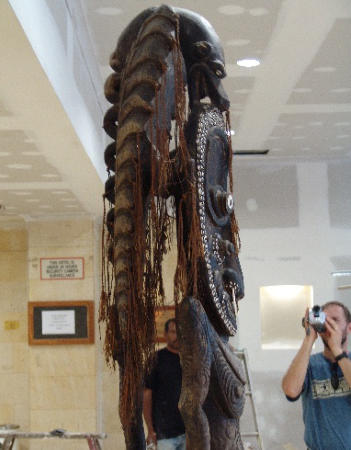
Figure 11 Ropen Statue – side view
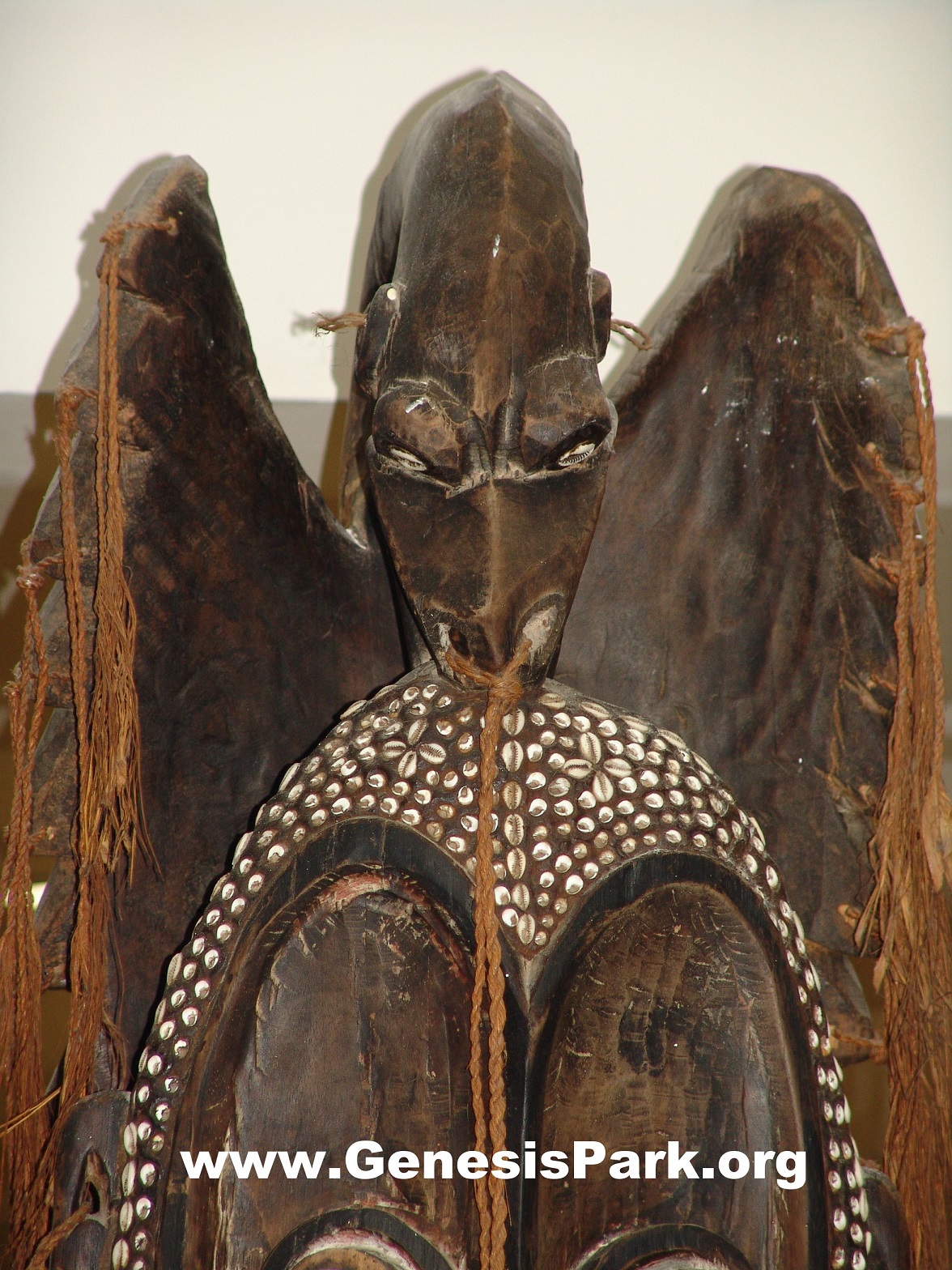
Figure 12 Ropen Statue – front view
The last leg of our journey took us through the villages of the western coast and down to the government station of Bunsel. While at Bunsel we met some folks that explained to us their traditional belief that the Ropen feasts on a particular kind of large mollusk. We had heard reports from other villages about these clams (some of which are reported to litter mount Bel). But the villagers were able to show us some of the shells, as big as five feet in diameter! This intriguing piece of evidence suddenly recalled to our minds the odd Mali name for Ropen—creature that carries its bed. Indeed a low-flying pterosaur carrying a large clam shell up into its mountain lair would seem to be “carrying its bed!”
After returning to the mainland we had an extra day in Port Moresby which afforded us the opportunity to research some very interesting indigenous wood carvings on display [Figures 11 and 12]. They depict a witch doctor with a reptilian form upon his shoulders. The creatures display a lizard-like ear, forked tongue, elongated snake-like neck, shallow beak, scaly membrane wings, dermal bumps running down their back, webbed feet, and a long tail (in one case being swallowed by a crocodilian). The statute displays a “hairy” appearance, reminiscent of the Rhamphorynchus reconstruction at the Minneapolis Museum of Natural History.

Figure 13 Ropen Composite Picture – DK Images
The dozens of interviews conducted on this expedition provide important information on the Ropen. Witnesses were carefully questioned about the timing of sightings; details about the creature were carefully recorded; and the credibility of these villagers was tested. For example, black and white profiles were placed before them showing the silhouettes of eagles, vultures, bats, and various pterosaurs (including rhamphorynchoid and pterodactyloid varieties). We even included a secretary bird with a long feathered tail. Eye witnesses consistently picked out the pterosaurs. After carefully collating the dozens of interviews, Guessman and I came up with a composite of most likely characteristics possessed by the Ropen. These are reflected in the rendition shown in Figure 13. For example, most native reports (though not all) mention a broadening at the end of the tail. Similarly, a slight majority of witnesses recollect having seen a head crest. It is interesting that the eyewitness reports from Owangi Village and the carved statute both highlight the dermal humps (a feature unknown in the world of pterosaur paleontology but depicted on the Sennacherib plate).
One might inquire which of the species of known pterosaurs most fits with the reports coming from PNG. The native’s suggestion of strong legs and powerful bipedal locomotion seem similar to the Dimorphodon. The short, heavy beak and face that were described also fit Dimorphodon or Anurognathus. Indeed natives identified Dimorphodon as the closest to Ropen, among the pterosaur pictures we displayed (despite the fact that it does not sport the Ropen’s head crest). However, it is to be expected that variation and genetic drift over the centuries would cause the Ropen population to display some unique features, despite the fact that most of these pterosaurs would comprise a single baramin (Biblical kind).
Conclusion
It is my contention that the similarities in the several independent lines of evidence produce a powerful argument for a living pterosaur in Papua New Guinea. An American WWII veteran’s testimony, a Highland PNG native’s sculpture, dozens of eye witness reports from Umboi and the Manus islands combine to make a strong case!
Follow up research might best be focused on the smaller islands to the north of Umboi (Long Island & Sakar Island), as well as the rivers flowing out the south of Umboi. Also, more research should be done in the Manus chain further to the north where Jim Blume had his Ropen sighting. The best place on Umboi to achieve a nighttime sighting of the bioluminescent flight would probably be the “bald spot” where we were on Mt. Tolou. It also seems like an ideal place to try to bait the Ropen. But a detailed photo of this creature might well require finding a regular feeding, drinking or sleeping site. Various villagers on the island are now participating in this research. Perhaps the disposable cameras that we left with them might yet capture a historic photo.
The remarkable similarity in ancient and modern fiery flying serpent reports supports the plain interpretation of Genesis that men and pterosaurs have always coexisted. For example, the reports of the bright appearance of pterosaurs from Isaiah, to the Egyptian hymn of the saraph, to the account from the Middle Ages to the modern reports of the Ropen are uncanny. It is very exciting to believe that one of these magnificent creatures still survives. Contemplating them should remind us of the one “Who being the brightness of his glory, and the express image of his person, and upholding all things by the word of his power, when he had by himself purged our sins, sat down on the right hand of the Majesty on high;” (Hebrews 1:3). What better picture could be given of the precious Messiah than the fiery flying serpent? Like false Nehushtan worship of old, evolutionists have appropriated the natural fascination with the terrible reptiles to propound their belief in naturalistic origins and billions of years of evolution. By God’s grace we should strive to tear down this high place and point people instead to the great Creator who, like the serpent in the wilderness, was lifted up to die as our Redeemer.
Update
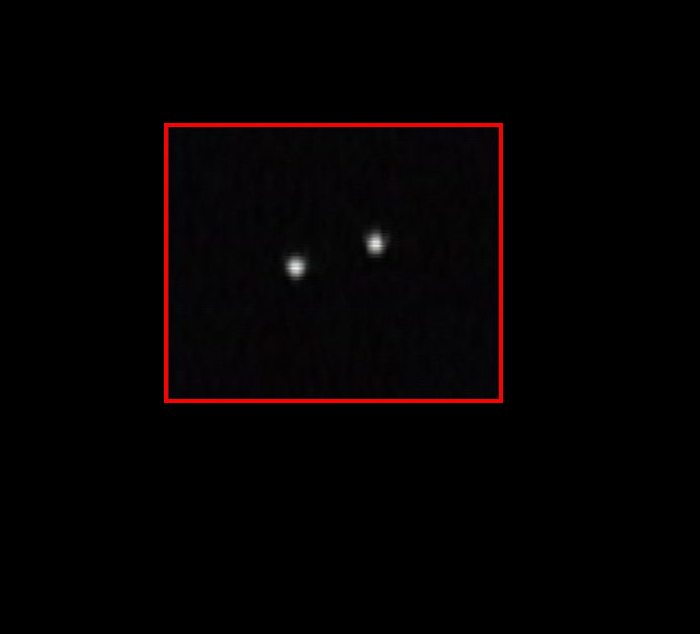
Figure 14 Flying Ropen Lights
This article was written in early 2005, submitted for publication in May 2005, and published March 2006. Subsequent to our expedition, there were multiple trips to PNG in 2007 that successfully videotaped the Ropen lights. Paul Nation went to a remote highland village and captured a brief video clip of dual lights [Figure 14]. Also the Sci-Fi channel went to Salamaua and photographed the strange bioluminescence.
Acknowledgements
Special thanks to John Goertzen for his pioneering research on the fiery flying serpent in history and for reviewing an early draft of this paper.
Aelianus, Claudius. 1972. On the characteristics of animals, 1641. Translated by A.F. Scholfield, Loeb Classical Library. HarvardUniversity Press, Cambridge, MA.
Alpin, P. 1979. Histoire naturelle de l’Egypte. Translated by R. de Fenoyl. IFAO, Le Caire.
Barnett, R.D. 1967. Layard’s Nimrud bronzes and their inscriptions. Eretz Israel 8:3.
Baugh, C. 1999. PNG Expedition Video II and Personal Interview.
Blume, J. 2000. Phone interview on pterosaur sightings in Papua New Guinea. SouthBay Creation Science Association, Los Angeles, CA.
Bochart, S. 1663. Hierozoocon: sive, de animalibus sacrae scriptura. In Libraria Weidmannia. 1793-1796. Leipzig, Germany.
Borger, R. 1956. Die Inschriften Asarhaddon’s königs von Assyrien. 1956. [Archiv fur Orientalforschung Beiheft 9] Graz, E. Weidner, Austria.
Brown, F. 2001. The Brown-Driver-Briggs Hebrew and English lexicon, Hendrickson Publishers, Inc., Peabody, MA.
Bugenhagen, Salme. 2004. [SIL Translator] Personal Correspondence.
Charbonneau-Lassay, L. 1940. Le bestiare du Christ., Desclée De Brower & Cie., Paris, France.
Clark, Neil, and William, Lindsay. 1995. DK Pockets: dinosaurs, D.K. Publishing, London, UK.
Constable, G. (editor). 1984. Enchanted world: dragons. Time-Life Books, New York.
Cooper, B. 1995. After the Flood, <http://www.ldolphin.org/cooper/contents.html> (8/12/05).
Cranfield, I. 2001. The illustrated directory of dinosaurs and other prehistoric creatures, Greenwich edition. Chrysalis Books, London, UK.
Crossman, Karl. 2003 Personal Correspondence.
Edersheim, Alfred. 1995. The Bible history, Old Testament, volume 2, The Exodus and the wanderings in the wilderness. Updated edition. Hendrickson Publishers, Inc., Peabody, MA.
Epstein, P.S. 1973. Monsters: their histories, homes, and habits. Doubleday, Garden City, NY.
Frankfort, Henri. 1948. Kingship and the Gods. The University of Chicago Press, Chicago, IL.
Gibbons, B. 1999. “Personal Interview of Tyson Hughes.”
Gill, J. 1766. An exposition of the entire Bible. W. Baynes, London, UK.
Goertzen, John. An Article for the 1998 Midwestern Evangelical Theological Society Conference held at GRBS, Grand Rapids, MI on September 30, 1998. <www.rae.org/pteroets.html> (8/12/05).
Ham, K. 1999. The great dinosaur mystery explained! Master Books, Green Forest, AR.
Henry, Matthew. 1992. A commentary on the whole Bible. Hendrickson Publishers, Inc. Peabody, MA.
Herodotus, Historiae, 1850. Translated by Henry Clay. Henry G. Bohn, London, UK.
Hirsch, E. and Benzinger, I. 2002. The Jewish Encyclopedia. <http://www.jewishencyclopedia.com/view_page.jsp?artid=488&letter=S&pid=0> (8/12/05).
Hodgkinson, D. 2004. Personal Interview.
Italica, Silius. 1934. Punica XV:142. Translated into English by J.D. Duff. Putnam, Loeb Classical Library, New York.
Joines, K. 1976. Winged serpents in Isaiah’s inaugural vision. Journal of Biblical Literature 86:410-415.
Josephus, Flavius. 1960. The antiquities of the Jews, book II: from the death of Isaac to the Exodus out of Egypt. Translated by William Whiston. Kregel Publications, Grand Rapids, MI.
Keel, O. 1977. Jahwe-Visionen und Siegelkunst. Verlag Katholisches Bibelwerk Stuttgart, Germany.
Kircher, Athanasius. 1664. Mundus Subterraneus. Joannes Janssonius à Waesberge, Amsterdam, Holland.
Lucanus, Marcus Annaeus. Pharsalia. Book IX. Translation by Sir Edward Ridley. 1896. Longmans, Green, and Co., London, UK
Luckenbill, D.D. 1989. Ancient records of Assyria and Babylon II, Histories and Mysteries of Man Ltd., London, UK.
Mayor, Adrienne, 2005, Fossil legends of the first Americans. Princeton University Press, Princeton, NJ.
Motyer, J.A. 1993. The prophecy of Isaiah: an introduction & commentary. Intervarsity Press, Downer’s Grove, IL.
Niebuhr, C. 1972. Travels through Arabia and other countries in the East. R. Morison and Son, Edinburgh, Scotland.
Oswalt, J.N. 1986. The new international commentary on the Old Testament: The book of Isaiah. William B. Eerdmans Publishing Company, Grand Rapids, MI.
Pliny the Elder. Natural history, book X: The natural history of birds. 1855. Edited and translated by John Bostock, M.D., F.R.S., H.T. Riley, Esq., B.A. Taylor & Francis, London, UK.
Roach, J. 2002. National geographic News, August 7, 2002. <http://news.nationalgeographic.com/news/2002/08/0807_020807_flyingsnake.html> (8/12/05).
Strabo, Geography, book XV: on India. 1967. Translated by H.L. Jones (editor). HarvardUniversity Press, Cambridge, MA.
Trevelyan, Marie. 1909. Folk-lore and folk stories of Wales. <http://www.red4.co.uk/Folklore/trevelyan/welshfolklore/chapt13.htm> (8/12/05).
Webster, Daniel. 1828. An American Dictionary of the English Language, S. Converse, New York, NY.
Wiseman, D.J. 1972. Flying serpents. Tyndale Bulletin 23. Tyndale House Publishers, Wheaton, IL.
Young, E.J. 1983. The book of Isaiah. William B. Eerdmans Publishing Company, Grand Rapids, MI.